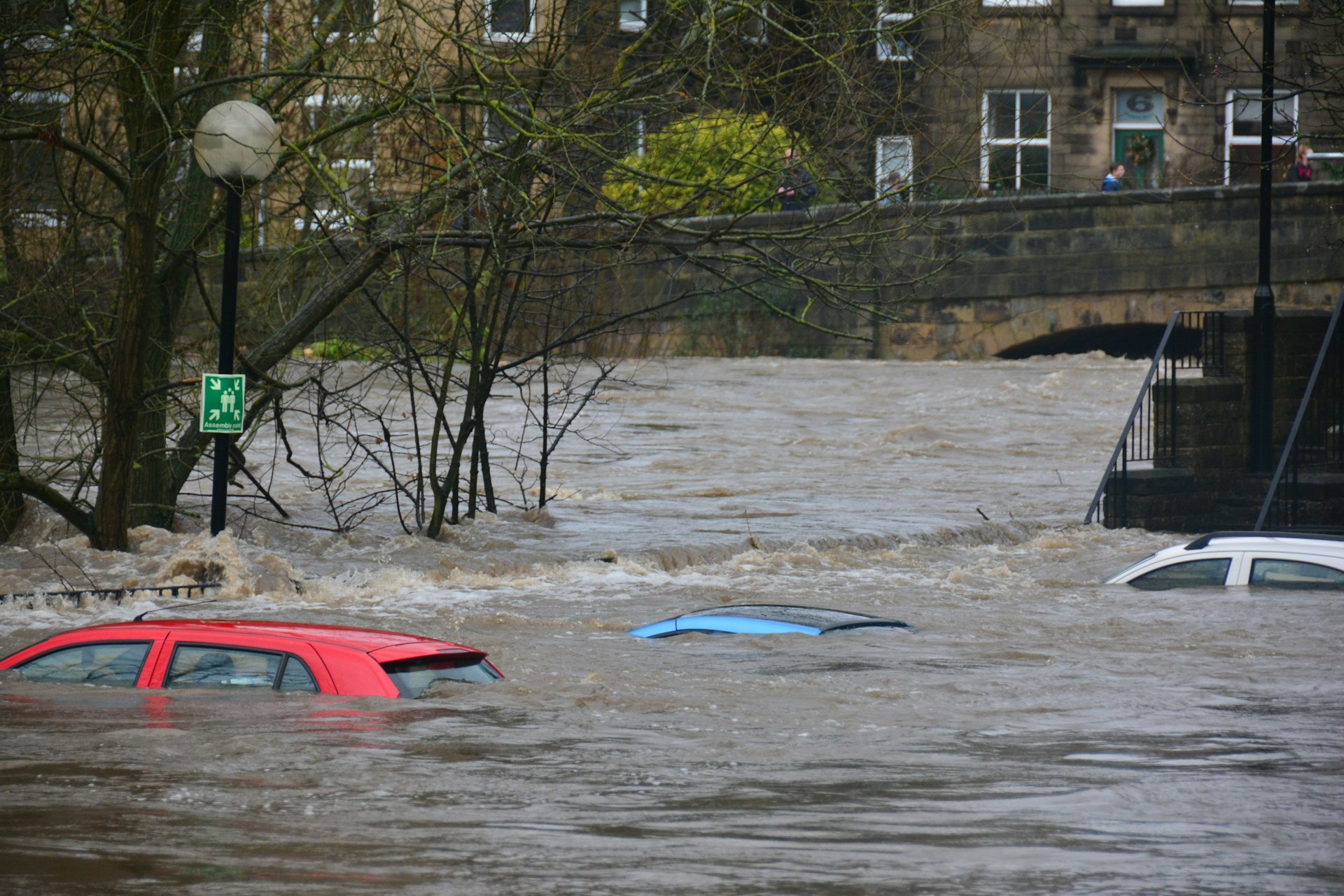
In May 2023, State Farm announced that it would stop accepting new applications for property insurance in California.1 The decision was not ideological. It was not a protest. It was arithmetic. The company looked at wildfire exposure, rebuilding costs, and reinsurance prices, and concluded that writing new homeowner policies in the state was no longer a viable business proposition.
Seven months later, Allstate made a similar announcement. So did Farmers, AIG, and Chubb, each in their own way limiting new business or withdrawing from specific markets. By the time the January 2025 wildfires burned through Pacific Palisades and Altadena, the insurance retreat from California was already well underway. The fires did not cause the retreat. They confirmed the reasoning behind it.
This pattern is not confined to California. It is unfolding across the Gulf Coast, through the Southeast, into parts of the Mountain West, and along the Eastern Seaboard. It is arguably the most consequential climate adaptation process happening in the United States today. And it is being driven not by Congress, not by the EPA, not by any elected body, but by insurance companies and the actuaries they employ.
The arithmetic of catastrophe
The global insurance industry has now absorbed six consecutive years of natural catastrophe losses exceeding $100 billion.2 In 2024, insured losses from natural disasters reached between $137 billion and $140 billion worldwide, according to estimates from Munich Re and Swiss Re.3 These figures represent only insured losses. Total economic damages were substantially higher.
The trend line is not ambiguous. Adjusted for inflation, catastrophe losses have been climbing for decades. But what changed in the late 2010s was the frequency of extreme loss years. Individual catastrophic events had always produced spikes. What the industry had not previously experienced was a sustained period in which $100 billion became the new floor rather than the occasional ceiling.
This shift matters because insurance, at its core, is a business built on the assumption that the past is a reasonable guide to the future. Actuarial science works by analyzing historical loss data, identifying patterns, and pricing premiums accordingly. When the underlying risk regime changes faster than historical data can capture, the entire model breaks down.
That is what is happening now. Wildfire behavior in the American West has moved outside the bounds of historical experience. Hurricane intensification rates in the Gulf of Mexico have shifted. Convective storm losses across the Midwest and Southeast, once considered manageable and predictable, have become the fastest-growing category of insured loss. The models are being recalibrated, but the recalibration consistently points in one direction: upward.
The cascade
The insurance industry’s response to rising losses follows a predictable sequence. Understanding that sequence is essential, because each step triggers the next, and the final consequences extend far beyond the question of who pays for roof damage.
The first step is repricing. Insurers raise premiums to reflect updated risk assessments. Nationally, homeowner insurance premiums increased by 40.4 percent cumulatively between 2019 and 2024.4 In high-risk states, the increases have been far steeper. The average homeowner premium in Florida now exceeds $7,000 per year, roughly three times the national average.5
The second step is restriction. When repricing alone cannot restore profitability, insurers stop writing new policies in the most exposed areas or decline to renew existing ones. State Farm’s California decision was a restriction. So was its subsequent non-renewal of 72,000 policies across the state.1 These are not isolated decisions by a single company. They reflect a market-wide reassessment of geographic risk.
The third step is exit. When restriction proves insufficient, insurers leave markets entirely. This has happened repeatedly in Florida, where the property insurance market lost seven carriers to insolvency between 2020 and 2023, and several more withdrew voluntarily.
Each of these steps shifts risk from the private insurance market to somewhere else. The question of where that risk lands is where the story becomes consequential for communities, property values, and public finance.
The insurer of last resort
In every state, there exists a mechanism designed to provide property insurance to homeowners who cannot obtain it on the private market. These mechanisms go by various names, but they are commonly known as FAIR Plans (Fair Access to Insurance Requirements). They were originally conceived as small, temporary backstops for a limited number of high-risk properties.
They are now absorbing the insurance market’s retreat.
California’s FAIR Plan had approximately 140,000 policies in 2018. By early 2025, it had over 610,000 policies and a total exposure exceeding $650 billion.6 That growth represents a fourfold increase in seven years. The plan was not designed for this. Its staffing, its capitalization, its administrative systems, and its reinsurance arrangements were all built for a residual market, not a primary one.
The FAIR Plan is technically an association of private insurers, meaning that if its losses exceed its reserves and reinsurance, the remaining private carriers in the state are assessed to cover the shortfall. In theory, this creates a backstop. In practice, it creates a spiral: the more policies the FAIR Plan absorbs, the larger the potential assessment on private carriers, which raises their costs, which makes them less competitive, which pushes more policies onto the FAIR Plan.
Florida’s Citizens Property Insurance Corporation, the state’s insurer of last resort, has experienced a similar trajectory. It is now one of the largest property insurers in the state by policy count. Its exposure to a single major hurricane is estimated in the tens of billions of dollars. If a Category 5 storm were to make landfall in a densely populated area while Citizens holds this level of exposure, the financial consequences would extend well beyond the insurance market.
At the federal level, the National Flood Insurance Program, administered by FEMA, is the oldest and largest government backstop for climate-related property risk. It is also $22.5 billion in debt to the U.S. Treasury.7 That debt accumulated primarily from a series of major flood events, most notably Hurricane Katrina and Hurricane Sandy, and the program has no realistic path to repaying it. The NFIP’s premium structure has historically underpriced flood risk for political reasons, subsidizing development in flood-prone areas for decades. Congress periodically extends the program without addressing the underlying insolvency.
The property value transmission mechanism
Insurance is not merely a cost. It is a condition of access to credit. Nearly all mortgage lenders require homeowner insurance as a condition of the loan. When insurance becomes unavailable or unaffordable, it does not merely impose a financial burden on existing homeowners. It interrupts the mechanism through which properties are bought and sold.
A home that cannot be insured at a reasonable cost is a home that is more difficult to finance. A home that is more difficult to finance is a home that attracts fewer buyers. A home that attracts fewer buyers sells for less.
This is not theoretical. A 2024 study by the National Bureau of Economic Research found that premium increases in climate-exposed ZIP codes had already reduced home prices by $40,000 or more in the most affected areas.8 The study documented a direct, statistically significant relationship between insurance cost increases and property value declines.
First Street Foundation, which models climate risk to physical assets, has projected that insurance-driven repricing will erase approximately $1.47 trillion in property value across the United States over the next thirty years.9 The losses are not evenly distributed. They are concentrated in the same coastal, wildfire-prone, and flood-vulnerable areas where development has expanded most aggressively over the past several decades.
Federal Reserve Chair Jerome Powell stated in testimony that he could foresee, within ten to fifteen years, regions of the United States where homeowners would be unable to obtain a mortgage because insurance was simply unavailable at any price.10 When the chair of the Federal Reserve describes a future in which entire regions are effectively excluded from the mortgage market, the statement carries implications for housing, banking, municipal finance, and the geographic distribution of American economic life.
The municipal finance chain
Property values are the foundation of local government finance in the United States. Property taxes fund schools, fire departments, road maintenance, water systems, and the broad array of services that constitute municipal governance. When property values decline, the tax base declines. When the tax base declines, services must be cut or taxes must be raised on a shrinking base. Neither option is sustainable.
The chain extends into the municipal bond market. Local governments borrow by issuing bonds, and the creditworthiness of those bonds depends in part on the economic health and property tax base of the issuing jurisdiction. When climate events damage property values and erode tax bases, bond ratings come under pressure.
This is no longer a hypothetical risk. After the January 2025 wildfires in Los Angeles, S&P Global downgraded the bonds issued by the Los Angeles Department of Water and Power by two notches.11 The downgrade was not based on physical damage to the utility’s infrastructure alone. It reflected a broader reassessment of the financial environment in which the utility operates, an environment shaped by wildfire risk, insurance availability, and the long-term trajectory of the regional economy.
A two-notch downgrade increases borrowing costs. Higher borrowing costs mean that the same infrastructure investment requires more revenue. More revenue means higher rates for ratepayers. Higher rates add to the cost burden for residents and businesses already dealing with rising insurance costs and potentially declining property values.
The chain is recursive. Insurance repricing affects property values, which affect tax bases, which affect bond ratings, which affect borrowing costs, which affect the cost of living and doing business, which further affects property values. Each link reinforces the others.
The geography of risk repricing
Over six million American homes currently lack any form of homeowner insurance.12 That number has been rising as premiums increase and availability contracts. These are not exclusively or even primarily low-value properties. They include homes whose owners have concluded that the cost of insurance has exceeded its perceived benefit, homes in areas where coverage is no longer available, and homes owned by people who simply cannot afford the premiums.
The geographic pattern of this uninsurance is instructive. It concentrates in the places where climate risk is highest: the Gulf Coast, the Florida peninsula, the California wildfire interface, and the inland areas subject to increasingly severe convective storms. This is not coincidental. It is the direct result of the insurance market pricing risk and property owners responding to those prices.
The result is a slow-motion geographic sorting. Americans with resources are beginning to factor insurance costs into their decisions about where to live. A 2024 survey by the Insurance Information Institute found that 40 percent of homeowners who relocated in the previous year cited insurance costs or availability as a factor in their decision. The movement is not dramatic in any single year. It is a gradual, continuous reallocation of population and economic activity based on climate risk as expressed through insurance pricing.
This sorting has a name in the economic literature: climate-driven spatial reallocation. It also has consequences that the literature is only beginning to quantify. The communities losing population are disproportionately those that can least afford to lose it: smaller cities, rural counties, and aging suburban developments whose infrastructure was built for a population that is now departing.
The political economy of price signals
Insurance markets produce what economists call price signals. A price signal conveys information about underlying conditions. When the price of homeowner insurance in a particular area rises sharply, the signal is clear: the cost of occupying that location, accounting for the physical risks it faces, has increased.
In a purely market-driven system, these price signals would drive adaptation. Expensive insurance would discourage construction in high-risk areas, incentivize resilient building practices, and accelerate the relocation of economic activity away from the most exposed locations. The market would produce, over time, a more rational geographic distribution of risk.
But the American system is not purely market-driven. It is layered with subsidies, regulations, political pressures, and historical commitments that muffle, distort, or directly contradict the signals that insurance markets are sending.
State regulators in Florida and California have historically suppressed premium increases to protect consumers, preventing insurers from charging rates that reflect actual risk. The NFIP has underpriced flood coverage for decades, encouraging construction in floodplains. Federal disaster relief, while essential for immediate recovery, creates a form of implicit insurance that reduces the incentive to avoid high-risk locations in the first place.
The tension between market signals and political incentives is not new. What is new is the scale of the gap between the two. As climate risk accelerates, the distance between what insurance markets say a location costs to occupy and what political systems are willing to let residents pay has become a chasm. That chasm is filled with debt, deferred maintenance, unfunded liabilities, and future disaster losses that someone will eventually bear.
The regulatory vacuum
Here is the central paradox: the insurance industry is performing a function that no government institution has been willing to perform. It is assessing climate risk at the property level, repricing that risk annually, and communicating the results through premiums and coverage decisions. It is, in effect, regulating land use, building practices, and development patterns through the mechanism of price.
This is not the function insurance was designed to serve. Insurance is a financial product, not a regulatory instrument. The companies making these decisions are not accountable to voters. Their risk assessments are proprietary. Their decisions about which neighborhoods to exit and which to stay in are made behind closed doors, governed by fiduciary obligations to shareholders and policyholders, not by any principle of equity or democratic participation.
The industry has neither sought nor welcomed this role. Insurers would prefer to operate in a stable risk environment where historical data predicts future losses with reasonable accuracy. The fact that they are instead driving one of the most consequential economic transformations in the country is a measure of the failure of the institutions that were supposed to handle this.
Congress has not passed comprehensive climate adaptation legislation. Federal agencies operate under authorities designed for a climate that no longer exists. State legislatures oscillate between suppressing insurance prices (which accelerates carrier withdrawal) and deregulating prices (which imposes costs that many residents cannot bear). Local governments continue to approve development in areas that insurers have identified as high-risk, because development generates tax revenue and political opposition to growth controls is intense.
In the absence of coherent governmental action, the insurance market fills the vacuum. It does so imperfectly, inequitably, and without democratic accountability. But it does so on a timeline that matches the speed at which climate risk is evolving, which is more than can be said for any legislative body in the country.
Models and alternatives
The United States is not the only country confronting the intersection of climate risk and insurance availability. The United Kingdom’s Flood Re program offers one model for how the problem might be approached differently.13
Flood Re is a reinsurance scheme, established by law in 2016, that pools flood risk for residential properties built before 2009. Insurers cede their flood risk for eligible properties to the pool, which is funded by a levy on the insurance industry. The program has moved 346,200 policies into affordable flood coverage.13 Critically, it includes a sunset clause: the program is scheduled to end in 2039, at which point flood insurance is expected to be priced at full risk. The sunset clause is intended to prevent the program from becoming a permanent subsidy for flood-prone development, and to create a transition period during which resilience investments reduce the underlying risk.
The design embeds an important principle: affordability and risk reduction must be linked. A program that makes insurance affordable without reducing the underlying risk is a subsidy for continued exposure. A program that reduces risk without addressing affordability leaves vulnerable populations unprotected during the transition.
The United States has no equivalent structure. The NFIP was supposed to serve a similar function, linking subsidized premiums to floodplain management requirements, but the link was never enforced with sufficient rigor. The result is a program that subsidized construction in flood zones for decades and is now $22.5 billion in debt.7
The only long-term solution
In a 2024 paper published in the Proceedings of the National Academy of Sciences, Carolyn Kousky and colleagues examined the full range of policy responses to the insurance availability crisis.14 Their conclusion was succinct: the only long-term solution is lowering the underlying risk.
This means hardening buildings. It means managed retreat from the most exposed locations. It means investing in natural infrastructure (wetlands, forests, barrier islands) that reduces the severity of climate impacts. It means reforming land use regulations to prevent new construction in areas that insurers have already identified as untenable. It means updating building codes to reflect current and projected climate conditions rather than historical ones.
None of this is technically impossible. Much of it is politically difficult. And all of it is being made more urgent by the insurance market’s own timeline, which operates on annual repricing cycles and quarterly earnings reports, not on the multi-decade planning horizons that climate adaptation requires.
The gap between those two timescales is where the damage accumulates. Every year that passes without systematic risk reduction is a year in which more properties become uninsurable, more communities lose their economic foundation, and more of the cost is shifted onto public balance sheets that are already strained.
What the numbers describe
The numbers in this story are large enough to be numbing. $140 billion in annual insured losses. $1.47 trillion in projected property value erosion.9 $22.5 billion in NFIP debt.7 610,000 policies on California’s FAIR Plan.6 Over 6 million uninsured homes.12 A 40.4 percent national premium increase in five years.4
Each of these numbers represents a specific failure. The $140 billion represents a physical environment that is producing damage at a rate the existing financial system was not built to absorb. The 610,000 FAIR Plan policies represent a private market that has concluded it cannot profitably insure a significant portion of the state’s housing stock. The 6 million uninsured homes represent households that have fallen through the gap between what insurance costs and what they can pay.
Together, they describe a system in transition. The old arrangement, in which the private insurance market covered nearly all residential property, government backstops handled the margins, and climate risk was a manageable input to actuarial models, is ending. What replaces it has not yet been determined.
The insurance industry is not going to solve the climate crisis. It is not trying to. It is doing something narrower and, in its own way, more consequential: it is telling the truth about what climate change costs, property by property, year by year, in a language that markets understand. The question is whether the political system can respond to that information before the market finishes sorting the country into places that are insurable and places that are not.
The sorting is already underway. The actuarial tables do not wait.
Footnotes
-
State Farm, corporate announcement, May 26, 2023; subsequent non-renewal of 72,000 California policies announced March 2024. ↩ ↩2
-
Swiss Re Institute, annual sigma reports, 2019-2024. Each year from 2019 through 2024 recorded insured catastrophe losses above $100 billion (inflation-adjusted). ↩
-
Munich Re, “Natural Disaster Losses 2024,” and Swiss Re Institute, “Sigma Report: Natural Catastrophes 2024.” Estimates ranged from $137 billion (Swiss Re) to $140 billion (Munich Re) in global insured losses. ↩
-
LendingTree analysis of homeowner insurance premiums, 2019-2024. Cumulative national increase of 40.4 percent over the five-year period. ↩ ↩2
-
Insurance Information Institute and National Association of Insurance Commissioners data, 2024. Florida average homeowner premium exceeded $7,000 annually. ↩
-
California FAIR Plan Association, exposure and policy data. Policy count grew from approximately 140,000 in 2018 to over 610,000 by early 2025, with total exposure exceeding $650 billion. ↩ ↩2
-
Congressional Research Service, “National Flood Insurance Program: Status and Issues,” updated 2024. NFIP debt to the U.S. Treasury stood at $22.5 billion. ↩ ↩2 ↩3
-
National Bureau of Economic Research, working paper on insurance costs and property values, 2024. Found premium increases reduced home prices by $40,000 or more in climate-exposed ZIP codes. ↩
-
First Street Foundation, “The Cost of Climate: America’s Growing Flood Risk,” 2024. Projected $1.47 trillion in cumulative property value losses over 30 years from climate-driven insurance repricing. ↩ ↩2
-
Federal Reserve Chair Jerome Powell, testimony before the Senate Banking Committee, 2024. Powell stated that within 10-15 years there could be “regions where you can’t get a mortgage.” ↩
-
S&P Global Ratings, downgrade of Los Angeles Department of Water and Power bonds, January 2025. Two-notch downgrade following the Palisades and Eaton fires. ↩
-
Insurance Information Institute and Census data analysis, 2024. Estimated over 6 million U.S. homes without any form of homeowner insurance. ↩ ↩2
-
Flood Re, annual report, 2024. Program covered 346,200 policies. Statutory sunset clause set for 2039. ↩ ↩2
-
Carolyn Kousky et al., “The Future of Property Insurance in a Changing Climate,” Proceedings of the National Academy of Sciences, 2024. ↩