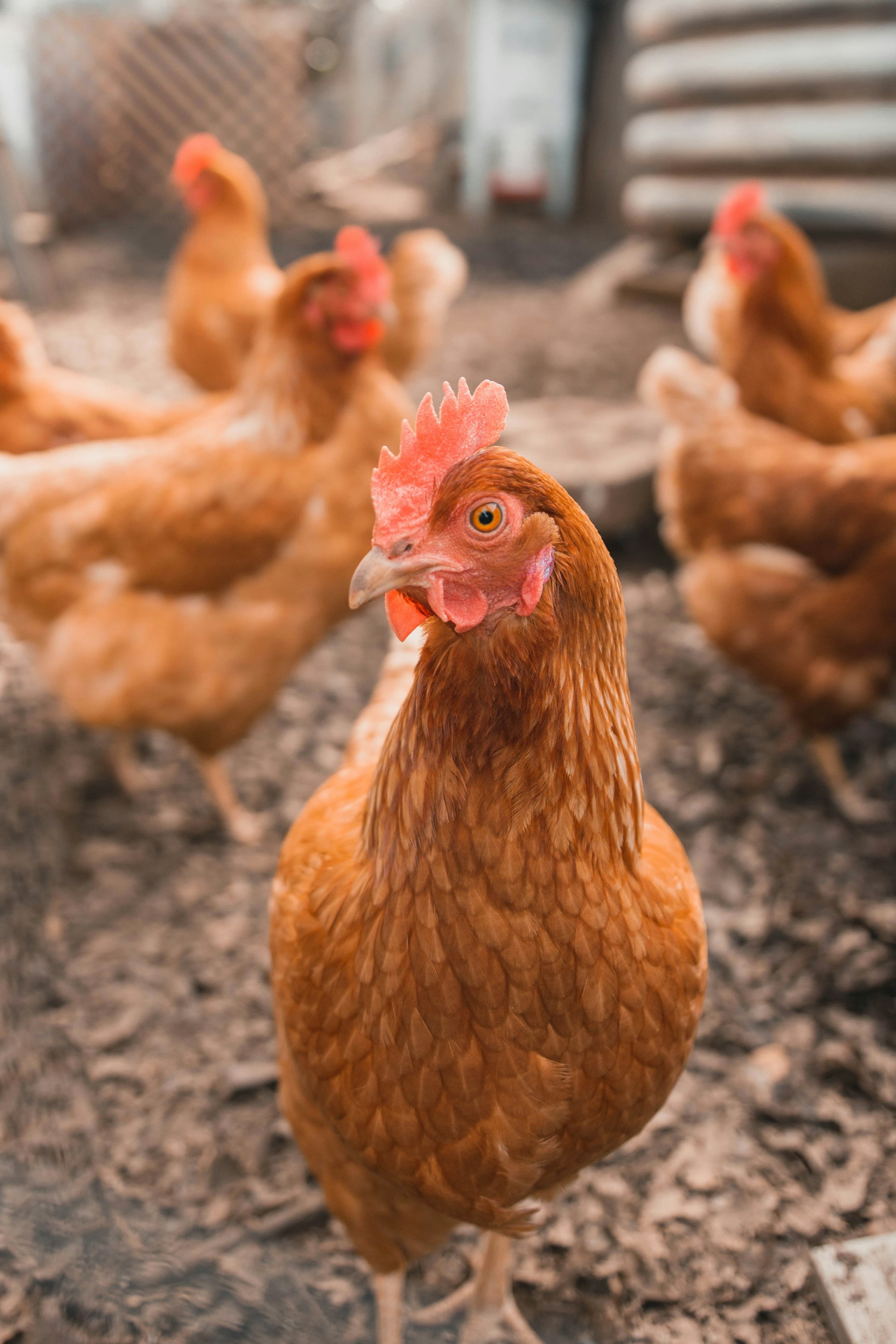
In the spring of 2024, a strain of highly pathogenic avian influenza, H5N1 clade 2.3.4.4b, was detected in dairy cattle in the Texas panhandle. The discovery was unusual. H5N1 had been a known threat in poultry for decades, cycling through wild bird populations and periodically devastating commercial flocks. But dairy cattle were not considered a significant host. The virus was not supposed to be there.
By March 2025, it had been confirmed in 989 dairy herds across the United States.1 Seventy-one human cases had been reported.2 One person had died, the first confirmed American death from H5N1.3 More than 90.9 million birds had been affected through culling and infection across the poultry industry.4
The public health response focused, as it typically does, on the immediate threat: surveillance, testing, containment, vaccination research. These are necessary responses. They are also insufficient ones, because they treat the outbreak as an event rather than as a symptom. The H5N1 outbreak in American dairy cattle is not an anomaly. It is a structural consequence of the system that produced it.
The architecture of risk
Industrial animal agriculture in the United States operates at a scale that most people, including most of the people who consume its products, do not fully comprehend.
As of the 2022 USDA Census of Agriculture, approximately 24,000 concentrated animal feeding operations (CAFOs) held roughly 1.7 billion animals across the country.5 The Sentience Institute, analyzing USDA data, has estimated that 99 percent of farmed animals in the United States are raised on factory farms.6 The remaining 1 percent, the pastoral image of farming that persists in advertising and cultural imagination, accounts for a negligible share of actual production.
These operations are optimized for a single variable: economic efficiency. Every design choice, from the genetic selection of the animals to the physical layout of the facilities to the pharmaceutical regimens administered throughout the animals’ lives, is oriented toward maximizing output per unit of input. The result is a system that produces animal protein at historically unprecedented volume and historically low cost.
The result is also a system that, by the same design choices that make it efficient, maximizes the conditions under which zoonotic pathogens emerge, evolve, and spread.
Consider the characteristics of a modern poultry operation. A single broiler house may contain 20,000 to 30,000 birds. The birds are genetically near-identical, bred from a small number of commercial lines selected for rapid growth. They are housed at extreme density, often with less than one square foot of space per bird. They live their entire lives indoors, in controlled environments designed to optimize feed conversion ratios. Their immune systems are suppressed by the stress of confinement, and their genetic uniformity means that a pathogen capable of infecting one bird is capable of infecting every bird in the house.
From a virologist’s perspective, this is a near-perfect incubator. Genetic uniformity eliminates the variation that would slow a pathogen’s spread through a diverse population. Extreme density ensures rapid transmission. Immunosuppression from chronic stress reduces the host’s ability to mount effective immune responses. Rapid turnover (broilers are typically slaughtered at six to eight weeks of age) creates a constantly replenishing supply of immunologically naive hosts. And the scale of the operation means that a single facility provides a pathogen with tens of thousands of opportunities to replicate, mutate, and adapt.
Dairy operations share many of these features. Modern dairy farms concentrate thousands of cows in confined spaces, move animals between facilities, and transport milk and animals through supply chains that connect operations across multiple states. The H5N1 outbreak in dairy cattle appears to have spread, at least in part, through the movement of infected cattle between farms and through contaminated milking equipment. The supply chain that distributes milk efficiently also distributes pathogens efficiently.
The mixing vessel problem
Influenza viruses are particularly dangerous because of their capacity for genetic reassortment. When two different influenza strains infect the same host cell simultaneously, their segmented genomes can recombine, producing novel viral strains with characteristics inherited from both parent viruses. This is the mechanism by which pandemic influenza strains typically emerge.
Pigs are especially important in this process. Their respiratory tracts contain receptors for both avian and mammalian influenza viruses, which means they can be simultaneously infected by strains from birds and from humans. Within the pig, those strains can exchange genetic material, producing novel viruses capable of infecting humans. For this reason, pigs have been described in the virology literature as immunological “mixing vessels.”7
Industrial pig farming concentrates millions of these mixing vessels in conditions of extreme density, often in proximity to poultry operations that serve as reservoirs for avian influenza strains. The 2009 H1N1 pandemic, which killed an estimated 151,000 to 575,000 people worldwide, originated in industrial pig farming operations.8 Genetic analysis of the pandemic strain revealed it was a reassortant virus containing gene segments from North American swine influenza, Eurasian swine influenza, North American avian influenza, and human influenza. The virus assembled itself from components circulating in the global industrial livestock system.
The current H5N1 situation adds a new dimension to this risk. The virus is now circulating in dairy cattle, a mammalian species. Each mammalian infection provides the virus with opportunities to adapt to mammalian biology, potentially acquiring mutations that would enable efficient human-to-human transmission. The virus has not yet acquired that capability. But with 989 infected herds and counting, each herd representing thousands of individual viral replication events, the statistical opportunity for such adaptation is substantial and growing.
Seventy-five percent of emerging infectious diseases in humans originate in animals.9 This is not a coincidence or a statistical artifact. It reflects the reality that humans and animals share pathogens, and that the intensity and nature of human-animal interaction determines the rate at which those pathogens cross species barriers. Industrial animal agriculture represents the most intensive form of human-animal interaction ever devised. The scale is unprecedented. The density is unprecedented. The genetic uniformity of the host populations is unprecedented. The volume of cross-species contact, mediated through the millions of workers who enter these facilities daily, is unprecedented.
The system is, in the most precise epidemiological sense, pandemic infrastructure.
The antibiotic accelerant
Layered on top of the density, the genetic uniformity, and the global supply chains is another feature of industrial animal agriculture that compounds pandemic risk: the mass use of antibiotics.
The World Health Organization and the U.S. Food and Drug Administration have estimated that between 66 and 73 percent of all antibiotics produced globally are administered to farm animals, not to treat diagnosed infections, but as growth promoters and prophylactic agents to prevent the infections that would otherwise be inevitable in crowded, stressful conditions.10 In the United States, approximately 80 percent of all antibiotics sold are for animal use.11
The animals excrete 75 to 90 percent of these antibiotics unmetabolized.12 The drugs pass through the animals’ bodies and enter the environment through manure, which is spread on fields, leaches into groundwater, and runs off into surface water. The result is a vast, continuous, low-level exposure of environmental bacteria to antibiotics, the precise conditions under which antimicrobial resistance evolves most rapidly.
The consequences are measured in human deaths. The Centers for Disease Control and Prevention has estimated that antibiotic-resistant infections cost the U.S. healthcare system $21 to $34 billion annually.13 Globally, the World Health Organization attributes approximately 700,000 deaths per year to antimicrobial resistance. If current trends continue, that figure is projected to reach 10 million deaths per year by 2050, exceeding the current annual death toll from cancer.14
The causal chain is direct. Industrial animal agriculture uses antibiotics to compensate for the conditions created by extreme confinement. That use drives the evolution of resistant bacteria. Those bacteria reach human populations through direct contact, through environmental contamination, and through the food supply. People become infected with organisms that do not respond to the drugs designed to treat them. Some of those people die.
This is not a speculative future risk. It is a present reality, documented by decades of epidemiological research, acknowledged by every major public health institution in the world, and fundamentally unchanged by that acknowledgment. The antibiotics continue to be used because they are economically rational within the system as designed. Removing them would require either reducing stocking density (which would reduce output) or accepting higher rates of disease and mortality in confined animals (which would also reduce output). The system’s profitability depends on the antibiotics. The antibiotics drive resistance. The resistance kills people. The system continues.
The geography of harm
The public health burden of industrial animal agriculture is not distributed equally. It falls disproportionately on the communities that live nearest to the facilities, and those communities are disproportionately low-income and disproportionately communities of color.
Research has consistently documented that communities of color are approximately 1.5 times more likely than white communities to live near concentrated animal feeding operations.15 In North Carolina, where the hog industry is concentrated in the eastern part of the state, a study by researchers at Duke University found that residents living near hog CAFOs experienced mortality rates approximately 30 percent higher than those in comparable communities without nearby operations.16 The excess mortality was attributed to respiratory disease, kidney disease, anemia, and infections.
The health effects are not subtle. People living near large-scale hog operations report higher rates of asthma, respiratory infections, nausea, and psychological stress. The facilities emit hydrogen sulfide, ammonia, and particulate matter laden with bacteria, including antibiotic-resistant bacteria. These emissions are continuous. They do not require an equipment failure or an unusual event. They are the normal, daily output of facilities operating as designed.
The environmental justice dimension of industrial animal agriculture is well documented but rarely incorporated into policy discussions about the industry. Debates about agricultural policy tend to be framed in terms of food production, economic efficiency, and trade. The people who breathe the air downwind of a 10,000-hog facility are not typically represented in those debates. Their health costs are externalized, borne by individuals and local healthcare systems rather than by the companies whose operations produce them.
The cost structure
The economics of industrial animal agriculture depend on the externalization of costs that, if internalized, would fundamentally alter the industry’s profitability.
The direct production costs are visible and well understood: feed, labor, facilities, energy, veterinary inputs. These costs have been relentlessly optimized over decades. A modern broiler chicken reaches slaughter weight in roughly 47 days, compared to 70 days in the 1960s, on less feed per pound of weight gained. A modern dairy cow produces roughly three times the milk of a cow in 1950. The efficiency gains are real, and they are the source of cheap animal protein.
The externalized costs are larger but less visible. They include the healthcare costs of antibiotic resistance ($21 to $34 billion per year in the United States alone). They include the environmental costs of water and air pollution from concentrated waste. They include the public health costs of pandemic risk, which, when a pandemic actually materializes, are measured in trillions of dollars. The COVID-19 pandemic, which originated in wildlife rather than livestock, cost the global economy an estimated $12.5 trillion through 2024. A pandemic originating in industrial livestock, with a more lethal pathogen than SARS-CoV-2, could cost substantially more.
These costs are real. They are paid by real people, through higher healthcare spending, through environmental degradation, through the economic disruption of pandemics. They are simply not paid by the industry that generates them. The price of a chicken breast at the supermarket reflects the direct costs of production. It does not reflect the cost of the antibiotic resistance that production generates, the respiratory disease in nearby communities, or the pandemic risk that the production system creates. The price is low because the costs are hidden.
What the system selects for
It is important to be precise about what is being described here. The argument is not that individual farmers or company executives intend to create pandemic risk. Most do not think in those terms. They are operating within an economic system that rewards efficiency and punishes its absence. A farmer who reduces stocking density to lower disease risk also reduces output and revenue. A company that eliminates prophylactic antibiotics accepts higher production costs. In a commodity market where the lowest-cost producer sets the price, these decisions are economically suicidal.
The system selects for the characteristics that maximize pandemic risk because those same characteristics maximize economic efficiency. Genetic uniformity is efficient because it produces predictable, uniform products. Extreme density is efficient because it minimizes the land and infrastructure required per unit of output. Rapid turnover is efficient because it maximizes throughput. Global supply chains are efficient because they connect production to the lowest-cost inputs and the highest-value markets.
Each of these characteristics, from the perspective of a virologist, is a risk factor. Genetic uniformity eliminates the population-level immune diversity that slows pathogen spread. Extreme density accelerates transmission. Rapid turnover provides a constant supply of susceptible hosts. Global supply chains transport pathogens across continents in hours.
The system is not broken. It is doing exactly what it was designed to do: produce the maximum quantity of animal protein at the minimum cost, with all other considerations treated as externalities. The pandemic risk is an externality. The antibiotic resistance is an externality. The community health impacts are an externality. They are real, they are large, and they are, from the system’s internal logic, someone else’s problem.
The biosecurity framing
There is another way to look at this, one that may prove more politically durable than the animal welfare framing that has dominated public discussion of factory farming for decades.
Industrial animal agriculture is a biosecurity risk. It is a risk not because of any single pathogen or any single outbreak, but because of the structural characteristics of the system itself. The 2009 H1N1 pandemic originated in industrial pig farming. The current H5N1 crisis is sustained and amplified by industrial poultry and dairy operations. The next pandemic, wherever it originates, will find in the industrial livestock system a ready-made amplification network: billions of genetically uniform, immunocompromised animals, concentrated in facilities that serve as incubators, connected by supply chains that serve as transmission vectors.
The biosecurity framework reframes the discussion in terms that do not depend on concern for animal welfare, which, while legitimate, has proven insufficient to drive systemic reform. Biosecurity is a framework that speaks to national security, economic stability, and the protection of human life. It asks a straightforward question: is it acceptable for the global food system to be structured in a way that maximizes the probability of pandemic events that cost trillions of dollars and millions of lives?
The answer to that question does not require any particular moral position on the treatment of animals. It requires only a rational assessment of risk and cost.
What would change look like
The solutions are not mysterious. They have been described in detail by public health researchers, veterinary scientists, and food system analysts for years. They include:
Mandatory reduction of prophylactic antibiotic use in animal agriculture, restricting antibiotics to the treatment of diagnosed infections rather than routine preventive use. The European Union has implemented such restrictions. Antibiotic use in EU livestock production has declined significantly without collapsing the industry. The precedent exists.
Reduction of stocking density to levels that reduce disease transmission risk. This would increase per-unit production costs. It would also reduce the frequency and severity of disease outbreaks, reduce antibiotic use, improve animal welfare, and reduce the environmental and health impacts on surrounding communities.
Investment in diversified, decentralized production systems that reduce the concentration of animals in single facilities and the genetic uniformity of production populations. Diversification reduces the speed at which pathogens can spread through a population and increases the resilience of the food system to disruption.
Strengthened surveillance and reporting requirements for zoonotic disease outbreaks in livestock operations, with mandatory reporting timelines and public disclosure of infection data. The H5N1 outbreak in dairy cattle was initially detected through ad hoc surveillance rather than systematic monitoring, and early reporting was slow and incomplete.
Internalization of the externalized costs of industrial production through mechanisms such as pollution fees, pandemic preparedness levies, or the elimination of subsidies that support the most intensive forms of production. If the price of industrially produced animal protein reflected its true costs, including healthcare, environmental, and pandemic risk costs, the competitive advantage of the most intensive systems would diminish substantially.
None of these changes would eliminate animal agriculture. None of them would require the adoption of any particular dietary philosophy. They would require the recognition that a food production system optimized exclusively for short-term economic efficiency, at the expense of public health, environmental integrity, and pandemic preparedness, is a system that imposes costs far greater than the savings it generates.
The structural question
The H5N1 outbreak in American dairy cattle will, in all likelihood, be contained. The immediate crisis will pass. Public attention will move on. And the system that produced the outbreak will continue to operate, unchanged in any fundamental respect, generating the same conditions, incubating the same risks, externalizing the same costs.
This is the pattern. SARS in 2003. H1N1 in 2009. MERS in 2012. H5N1, now. Each outbreak prompts a cycle of alarm, response, and forgetting. Each time, the structural conditions that produced the outbreak are identified, documented, and then left in place. The system is too large, too profitable, and too politically protected to reform in response to any single crisis, no matter how severe.
The question is whether the cumulative weight of evidence, the steady accumulation of outbreaks, resistance patterns, and community health data, will eventually produce the political conditions for structural reform. The evidence is not in dispute. The mechanisms are understood. The costs are documented. The alternatives are available. What is missing is the political will to impose costs on a profitable industry in the interest of public health.
That will is not going to emerge from within the industry. It is not going to emerge from voluntary commitments or corporate social responsibility programs. It will emerge, if it emerges at all, from a recognition by policymakers and the public that the current system’s costs, measured in antibiotic resistance, community health impacts, and pandemic risk, are too high to continue externalizing.
Nine hundred eighty-nine dairy herds. Ninety million birds. Seventy-one human cases. One death, so far. The system that produced these numbers is still running. It will produce the next set of numbers, and the set after that, until the structure changes or until the next pandemic forces a reckoning that could have been avoided.
The infrastructure is in place. The question is only when it will be used.
Footnotes
-
USDA Animal and Plant Health Inspection Service (APHIS), “Confirmed Detections of Highly Pathogenic Avian Influenza in Livestock,” updated March 2025. Cumulative total of 989 dairy herds confirmed positive for H5N1 clade 2.3.4.4b across the United States. ↩
-
Centers for Disease Control and Prevention (CDC), “H5N1 Bird Flu: Current Situation,” updated March 2025. First confirmed U.S. human death from H5N1 reported in January 2025. ↩
-
Ibid. The deceased individual had exposure to infected poultry and dairy operations. The death marked the first fatal human H5N1 case in the United States. ↩
-
USDA APHIS, “Detections of Highly Pathogenic Avian Influenza,” 2025. Cumulative total of approximately 90.9 million birds affected through direct infection and depopulation (culling) of exposed flocks since the outbreak began in 2022. ↩
-
USDA National Agricultural Statistics Service, “2022 Census of Agriculture,” 2024. The census identified approximately 24,000 operations meeting the EPA definition of concentrated animal feeding operations, holding approximately 1.7 billion animals. ↩
-
Sentience Institute, “US Factory Farming Estimates,” 2019 (updated with 2022 Census data). Analysis of USDA Census of Agriculture data estimating that 99 percent of farmed animals in the United States are raised in factory farm conditions. ↩
-
Ma, W., Kahn, R.E., and Richt, J.A., “The Pig as a Mixing Vessel for Influenza Viruses: Human and Veterinary Implications,” Journal of Molecular and Genetic Medicine, 2008. Review article describing the molecular basis for pigs’ susceptibility to both avian and mammalian influenza viruses and their role as hosts for viral reassortment. ↩
-
Smith, G.J.D. et al., “Origins and Evolutionary Genomics of the 2009 Swine-Origin H1N1 Influenza A Epidemic,” Nature, 2009. Genetic analysis established that the 2009 H1N1 pandemic strain was a reassortant virus with gene segments derived from swine influenza viruses circulating in industrial pig populations. ↩
-
Jones, K.E. et al., “Global Trends in Emerging Infectious Diseases,” Nature, 2008. The study analyzed 335 emerging infectious disease events between 1940 and 2004 and found that approximately 75 percent of emerging infectious diseases in humans have zoonotic origins. ↩
-
World Health Organization, “Global Action Plan on Antimicrobial Resistance,” 2015; U.S. Food and Drug Administration, “Summary Report on Antimicrobials Sold or Distributed for Use in Food-Producing Animals,” annual reports 2019-2024. Estimates of the share of global antibiotic production used in animal agriculture range from 66 to 73 percent depending on methodology and data source. ↩
-
FDA Center for Veterinary Medicine, “Antimicrobials Sold or Distributed for Use in Food-Producing Animals,” 2022. Approximately 80 percent of all medically important antibiotics sold in the United States are for use in food-producing animals. ↩
-
Boxall, A.B.A. et al., “Pharmaceuticals and Personal Care Products in the Environment: What Are the Big Questions?” Environmental Health Perspectives, 2012. Studies consistently show that 75 to 90 percent of administered antibiotics are excreted by animals in unchanged or active metabolite forms. ↩
-
Centers for Disease Control and Prevention, “Antibiotic Resistance Threats in the United States,” 2019 (updated 2024). The CDC estimated that antibiotic-resistant infections cost the U.S. healthcare system between $21 billion and $34 billion annually in direct healthcare costs, with additional productivity losses of approximately $35 billion. ↩
-
O’Neill, J., “Tackling Drug-Resistant Infections Globally: Final Report and Recommendations,” Review on Antimicrobial Resistance, 2016. The review, commissioned by the UK government, estimated 700,000 annual deaths globally from antimicrobial resistance and projected 10 million annual deaths by 2050 if current trends continue. ↩
-
Wing, S. et al., “Environmental Injustice in North Carolina’s Hog Industry,” Environmental Health Perspectives, 2000; updated analyses by the Environmental Justice Collaborative, 2022. Research consistently shows that communities of color are approximately 1.5 times more likely than white communities to be located in proximity to concentrated animal feeding operations. ↩
-
Kravchenko, J. et al., “Mortality and Health Outcomes in North Carolina Communities Located in Close Proximity to Hog Concentrated Animal Feeding Operations,” North Carolina Medical Journal, 2018 (Duke University). The study found approximately 30 percent higher mortality rates from multiple causes in communities near hog CAFOs compared to otherwise similar communities. ↩